

AquaFunded: Risk Management Habits That Actually Help You Get Funded
In the competitive world of proprietary trading, passing an evaluation like AquaFunded is not simply about being profitable—it’s about demonstrating consistency, discipline, and above all, elite-level risk management. Many traders come into these challenges with solid strategies, yet still fail repeatedly. The reason is simple: they underestimate how critical risk control is in the evaluation process.
AquaFunded, like most prop firms, is not looking for traders who can make the most money in the shortest time. Instead, they are searching for traders who can survive, adapt, and grow capital responsibly. This means your habits, your discipline, and your ability to manage downside risk matter far more than your ability to chase profits.
Below are the most important risk management habits that, when applied consistently and deeply, can significantly increase your chances of getting funded.
1. Build a “Survival First” Mindset

The biggest mistake traders make is approaching a funded challenge with a “win fast” mentality. This mindset leads to aggressive position sizing, emotional trading, and eventually hitting drawdown limits. To succeed with AquaFunded, you must rewire your thinking: your primary goal is not to make money—it is to survive.
Survival means protecting your account at all costs. You should think in terms of longevity rather than speed. Ask yourself: “Can I still be trading tomorrow, next week, and next month?” If the answer is no, your current risk approach is too aggressive.
This mindset shift changes everything. Instead of forcing trades, you become selective. Instead of chasing the market, you wait patiently. Instead of risking large amounts for quick gains, you accept smaller, controlled profits.
Professional traders understand that consistency compounds over time. By focusing on survival, you naturally align your behavior with what AquaFunded is actually evaluating—discipline and control. Ironically, when you stop trying to win fast, you increase your chances of passing much faster.
TryAqua $1 Model
2. Master Position Sizing and Fixed Risk Per Trade
Position sizing is the backbone of all risk management. Without a consistent approach, even the best strategy will fail. One of the most effective habits is to risk a fixed percentage of your account on every trade—typically between 0.5% and 1%.

Why is this so powerful? Because it removes emotional decision-making. When traders don’t have fixed risk rules, they tend to increase lot sizes after losses (revenge trading) or over-leverage during winning streaks (overconfidence). Both scenarios are dangerous and often lead to breaching drawdown limits.
With AquaFunded, consistency is everything. By risking the same percentage on every trade, you create a predictable equity curve. You know exactly how many losses you can sustain, and you eliminate the possibility of a single trade destroying your account.
To take this further, you should also adjust your position size based on stop-loss distance. This ensures that your risk remains constant regardless of market conditions. Over time, this habit builds mathematical stability into your trading system—something every funded trader relies on.
3. Treat Drawdown Limits as Non-Negotiable Rules
AquaFunded’s rules are very clear: exceed the daily drawdown or maximum drawdown, and you fail. Yet many traders treat these limits as flexible, pushing their luck until it’s too late.
Successful traders take the opposite approach. They create a buffer. For example, if the daily drawdown limit is 5%, they may stop trading at 2–3%. This conservative approach ensures they never come close to violating the rules.

More importantly, they understand the psychological impact of drawdowns. After a series of losses, emotions intensify—leading to impulsive decisions. By stopping early, you protect not just your account, but also your mental state.
You should also implement a “max trades per day” rule or a “stop after 2 losses” rule. These personal limits act as an additional layer of protection, ensuring you stay disciplined even when the market becomes unpredictable.
Remember, AquaFunded is testing whether you can follow rules under pressure. Respecting drawdown limits strictly—and even conservatively—is one of the clearest signals that you are ready to manage larger capital.
4. Focus on High-Quality Setups, Not Quantity
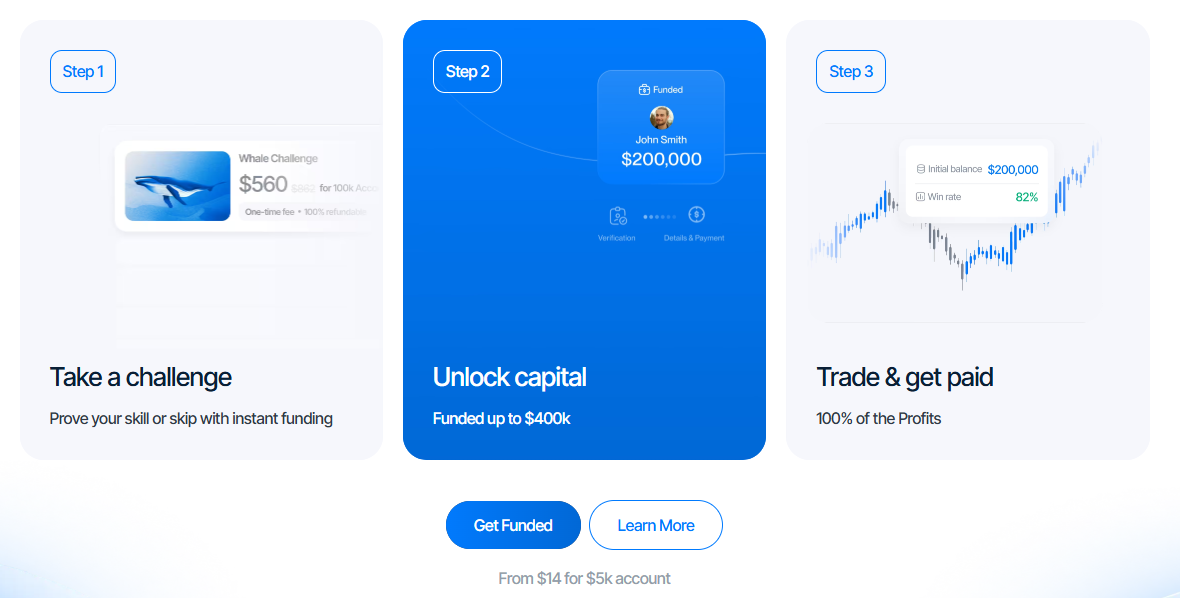
Many traders believe that taking more trades increases their chances of success. In reality, overtrading is one of the fastest ways to fail a funded challenge.
Every trade carries risk. The more trades you take, the more exposure you have to mistakes, emotional decisions, and market noise. Instead of focusing on quantity, you should prioritize quality.
This means defining very clear criteria for your setups. Only enter trades that meet all your conditions—no exceptions. If the setup isn’t perfect, you simply don’t trade.
This level of selectivity dramatically improves your performance. Your win rate increases, your risk decreases, and your confidence grows. More importantly, it aligns perfectly with what AquaFunded wants to see: discipline and patience.
Think of trading like hunting, not fishing. You are not casting a wide net—you are waiting for the perfect opportunity and executing with precision.
5. Develop Emotional Discipline and Mental Control
Even with perfect rules, many traders fail because they cannot control their emotions. Fear, greed, frustration, and impatience can all override logic in critical moments.
Risk management is not just technical—it is psychological. You must train yourself to remain calm under pressure. This means accepting losses without reacting emotionally and sticking to your plan regardless of recent outcomes.
One effective method is pre-defining your actions. Before entering a trade, you should already know your entry, stop-loss, take-profit, and exit conditions. Once the trade is live, there should be no decisions left to make.
Another powerful habit is taking breaks. After a loss, step away from the charts. Give yourself time to reset mentally. This prevents revenge trading and helps you return with a clear mindset.
AquaFunded evaluations are designed to expose emotional weaknesses. Traders who remain stable and consistent—even during losing streaks—are the ones who pass.
Trading Rules
6. Track Everything with a Detailed Trading Journal
If you are not tracking your trades, you are essentially trading blind. A detailed journal is one of the most powerful tools for improving risk management.

You should record every trade, including:
- Entry and exit points
- Risk percentage
- Reason for taking the trade
- Emotional state before and after
- Outcome and lessons learned
Over time, this data reveals patterns. You may notice that you perform poorly during certain market conditions, or that you tend to break rules after consecutive losses.
This awareness allows you to make targeted improvements. Instead of guessing what’s wrong, you have clear evidence guiding your decisions.
For AquaFunded, journaling does more than improve performance—it builds accountability. It forces you to follow your own rules and continuously refine your approach.
Conclusion
Passing an AquaFunded challenge is not about finding a “secret strategy” or making massive profits quickly. It is about proving that you can manage risk with precision, discipline, and consistency.
By adopting a survival-first mindset, mastering position sizing, respecting drawdown limits, focusing on quality trades, controlling your emotions, and tracking your performance, you transform yourself into the type of trader that prop firms are looking for.
In the end, risk management is not just a skill—it is a habit. And the traders who build strong habits are the ones who don’t just get funded, but stay funded long-term.