


Atlasfunded prop firm – A detailed educational analysis of the Atlasfunded prop firm, covering its evaluation model, drawdown rules, profit split structure, payout process, fees, and scaling plan. Learn how the framework works and what traders should understand before participating.
Introduction
The proprietary trading industry has expanded significantly in recent years, offering independent traders access to capital through structured evaluation programs. As more firms enter the market, traders are increasingly researching the operational details behind each model before committing time or capital.
This educational guide examines the Atlasfunded prop firm from a structural and risk-management perspective. Rather than focusing on marketing claims, this article analyzes:
-
The evaluation model
-
Trading rules and risk parameters
-
Drawdown methodology
-
Profit split and payout process
-
Account conditions and scaling framework
-
Practical considerations for traders
The goal is to provide traders — particularly beginners to intermediate participants — with a clear understanding of how evaluation-based proprietary firms operate and how Atlasfunded fits within that broader framework.
Understanding the Atlasfunded Prop Firm Model
What Is a Proprietary Trading Firm?
A proprietary trading firm (prop firm) provides capital to traders who pass a defined evaluation process. Instead of depositing large sums of their own money, traders demonstrate discipline and profitability under simulated or controlled conditions. Upon successful completion, they receive access to funded accounts governed by specific risk rules.
The Atlasfunded prop firm operates under this common evaluation-based structure.
In general, evaluation firms rely on:
-
Defined profit targets
-
Maximum drawdown limits
-
Daily loss caps
-
Trading rule compliance
-
Structured payout cycles
These rules are designed to assess risk control as much as profitability.
Atlasfunded Evaluation Model Explained
1. The Evaluation Phase
Like many modern prop firms, Atlasfunded utilizes a structured evaluation model. The purpose of this phase is to measure:
-
Consistency
-
Risk management discipline
-
Emotional control
-
Rule adherence
Evaluation models typically require traders to:
-
Reach a predefined profit target
-
Avoid breaching daily or overall drawdown limits
-
Respect trading restrictions (lot size, news trading, consistency rules, etc.)
2. Profit Target Requirements
Evaluation programs commonly set profit targets between 8% and 10% of the account balance. Traders must reach this threshold without violating risk limits.
Key considerations:
-
Profit targets are often fixed, not time-weighted
-
There may or may not be a minimum trading day requirement
-
Some models include consistency rules to prevent excessive one-day gains
Understanding these mechanics is critical before entering any evaluation.
Atlasfunded Trading Rules and Risk Parameters
Maximum Drawdown Rules
Drawdown structure is one of the most important aspects of any prop firm model.
There are generally two main types:
-
Static Drawdown – Fixed maximum loss from the starting balance
-
Trailing Drawdown – Moves upward as account equity increases
Traders researching the Atlasfunded prop firm should carefully review:
-
Whether drawdown is balance-based or equity-based
-
Whether trailing drawdown stops once profit targets are hit
-
Whether it locks in at initial balance
Drawdown rules determine account longevity and risk flexibility.
Daily Loss Limits
Most prop firms impose a daily loss cap to prevent excessive single-day exposure.
Daily loss limits:
-
Reset every trading day
-
Include floating losses in some models
-
May be calculated from starting balance or equity
Violating daily loss rules typically results in account termination, even if overall profit target is close.
Consistency Requirements
Some firms implement consistency metrics to discourage high-risk, single-trade wins.
Examples include:
-
Maximum percentage of total profits from one trade
-
Maximum daily gain percentage
-
Minimum number of trading days
These rules aim to assess sustainable performance rather than short-term volatility.
Atlasfunded Account Requirements and Conditions
Understanding account conditions helps traders evaluate operational compatibility.
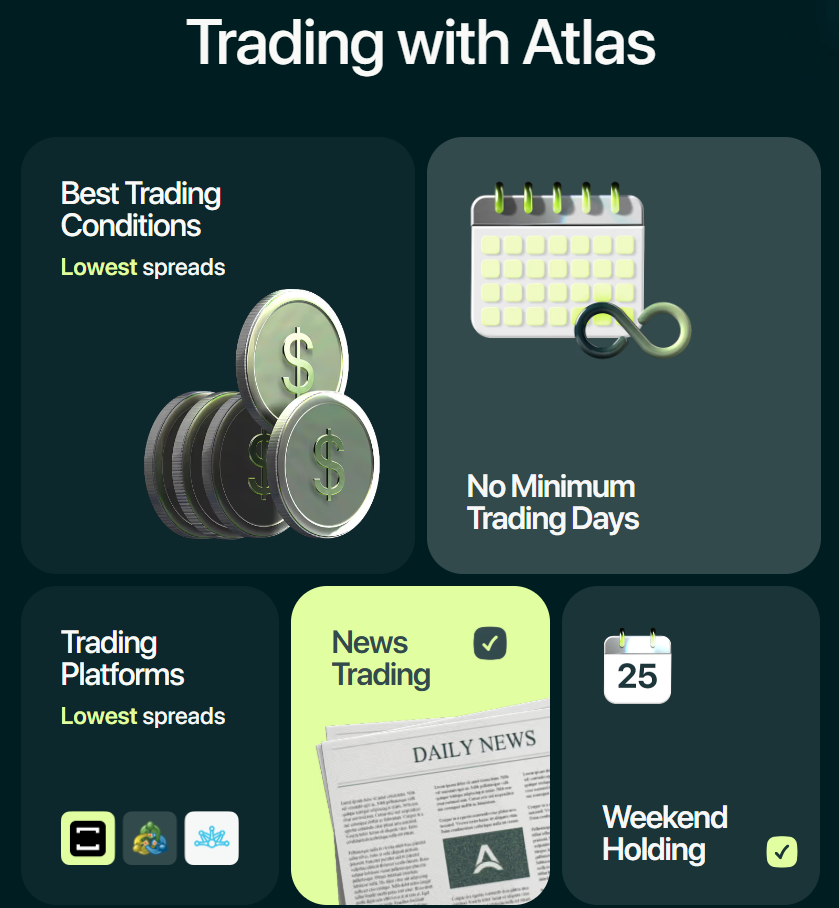
Typical account conditions may include:
-
Available leverage (e.g., 1:30, 1:50, 1:100)
-
Instrument restrictions (forex, indices, commodities, crypto)
-
Position holding rules (overnight, weekend policies)
-
News trading restrictions
-
Expert Advisor (EA) policies
Traders using automated systems should carefully verify whether algorithmic trading is permitted and under what constraints.
Fees and Cost Structure
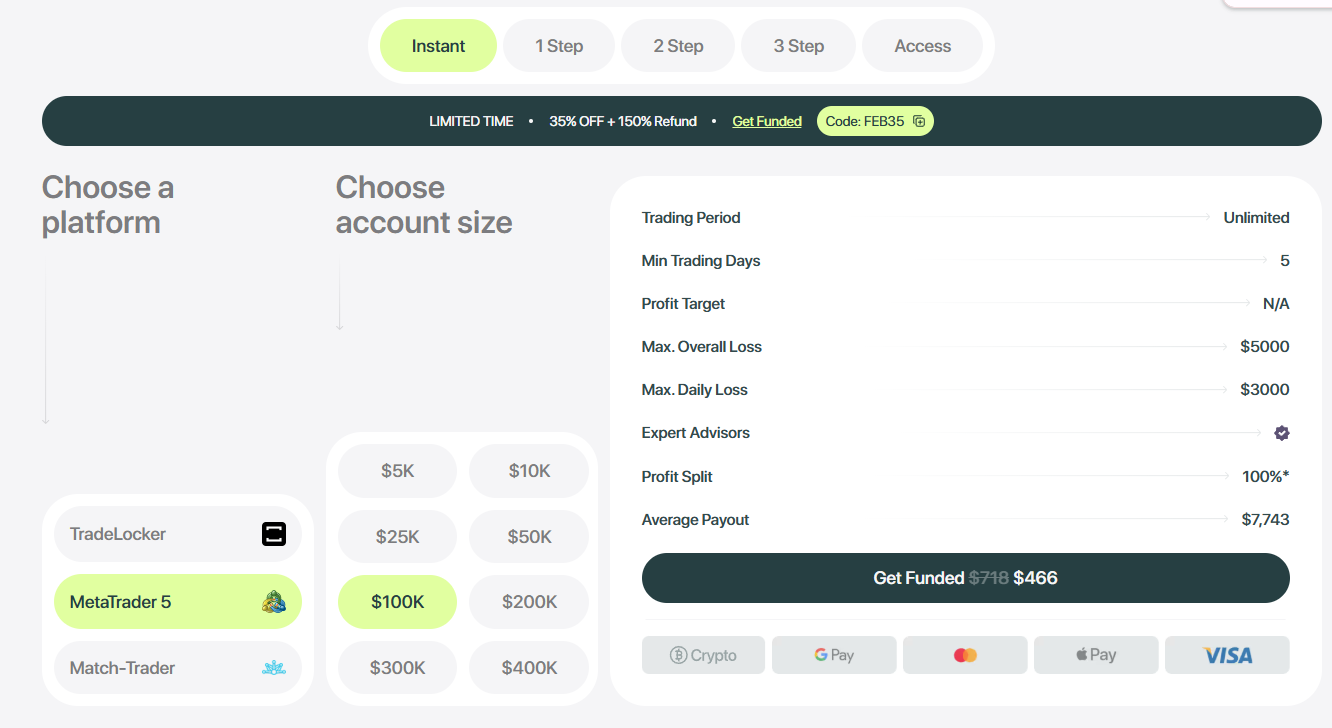
Evaluation-based prop firms generally operate on a one-time or recurring challenge fee.
Important cost considerations include:
-
Evaluation fee structure
-
Refund policies (if applicable)
-
Scaling account fees (if any)
-
Reset or retry costs
While evaluation fees are common in the industry, traders should view them as part of a structured assessment process rather than an investment.
Cost transparency is a key factor when assessing firm credibility.
Atlasfunded Profit Split Structure
How Profit Sharing Works
Once funded, traders earn a percentage of net profits.
Industry-standard splits typically range between:
-
70% to 90% trader share
-
10% to 30% firm share
The Atlasfunded profit split structure should be evaluated in relation to:
-
Withdrawal frequency
-
Scaling incentives
-
Risk limits
Higher profit splits may come with stricter rules. Balance between flexibility and payout percentage is important.
Atlasfunded Payout Process and Withdrawal Cycle
Understanding payout logistics is essential before joining any firm.
Common payout considerations:
-
Minimum withdrawal thresholds
-
Payout frequency (biweekly, monthly)
-
Profit calculation methodology
-
Payment methods
-
Processing timelines
Some firms require a minimum number of trading days before the first withdrawal. Others may apply consistency checks.
Traders should review:
-
Whether profits are calculated on closed trades only
-
Whether floating equity impacts payout eligibility
-
Whether risk breaches void pending payouts
Operational clarity helps prevent misunderstandings.
Scaling Plan and Growth Opportunities
What Is a Scaling Plan?
Scaling plans reward consistent traders by increasing account size over time.
Typical scaling criteria include:
-
Maintaining profitability across several payout cycles
-
Avoiding rule violations
-
Meeting minimum return thresholds
Scaling structures can significantly affect long-term earning potential.
For traders researching the Atlasfunded scaling plan, consider:
-
Frequency of capital increases
-
Percentage growth per cycle
-
Whether scaling resets drawdown limits
-
Maximum achievable capital
Scaling should align with realistic trading performance expectations.
Risk Management Considerations for Traders
Passing an evaluation is less about aggressive gains and more about disciplined execution.
Key principles include:
-
Protect capital before targeting profits
-
Respect daily drawdown limits
-
Avoid overexposure during volatility
-
Understand how equity drawdown differs from balance drawdown
Example:
If a trader has a $100,000 evaluation account with:
-
5% daily loss limit
-
10% maximum drawdown
That means:
-
Daily max loss = $5,000
-
Overall max loss = $10,000
Exceeding either invalidates the account.
Even experienced traders must adapt their position sizing to align with firm rules rather than personal account habits.
Comparing Atlasfunded to Broader Prop Firm Models
When evaluating the Atlasfunded prop firm, it helps to compare structural characteristics across the industry.
Key comparison factors:
-
One-step vs two-step evaluation
-
Static vs trailing drawdown
-
Minimum trading day requirements
-
Profit split percentages
-
Withdrawal frequency
-
Instrument flexibility
No single structure is universally superior. The appropriate model depends on:
-
Trader style
-
Risk tolerance
-
Time availability
-
Strategy type
Institutional-style traders may prioritize rule clarity and consistency over aggressive payout percentages.
Common Risks in Evaluation-Based Prop Firms
While prop firms offer capital access, there are structural risks to consider:
1. Rule Complexity
Small rule misunderstandings can lead to account termination.
2. Psychological Pressure
Fixed profit targets and drawdown caps can influence decision-making.
3. Over-Leveraging
High leverage availability can create unnecessary exposure.
4. Misaligned Expectations
Evaluation programs test discipline, not high-frequency speculation.
Education and preparation reduce these risks.


